It’s 2:30am and your new puppy is barking, whining, and crying in their crate. It’s breaking your heart AND keeping you wide awake all night. Sound familiar? A covered crate may be the solution. Covering puppy crate mimics a den environment, which can help your dog feel more at ease and settle into their new home faster.
Dogs are instinctively den animals, so a wide-open crate can overwhelm the pup by making them feel overexposed. This can be extremely challenging for a pup struggling to adapt to a new home, especially for an anxious dog. Here’s a look at the benefits of covering a dog’s crate, as well as tips on how to do so safely and effectively.
Why Do Covered Crates Make Dogs Feel More Comfortable?
Dogs are den animals by instinct, so a covered crate replicates the comfort and enclosure of a natural den, which can make a dog feel safer and more secure, especially if it is adjusting to a new living space.
In nature, canines find shelter in small, enclosed spaces for rest and safety. If they are out in the open, they are exposed to the elements as well as predators. That’s why an open crate, especially one surrounded by the sounds and other stimuli caused by routine household activity, can be triggering to a dog, making them scared and stressed.
While providing your dog with a comfortable, secure cage or crate like our Collapsible Aluminum Heavy Duty Dog Crate is always a good idea, your dog may need a little extra to feel totally secure. Providing cover can do the trick, turning an overwhelming, open space into a closed, cozy den. And once your dog has grown accustomed to that space with calm and rest instead of fear, they will seek it out on their own, helping them feel more comfortable and making it much easier for you to create a bedtime/rest routine for them.
What Are Some Benefits to Covering a Dog’s Crate?
Something as simple as covering puppy crate can provide several benefits, making your dog feel more at home and providing you some peace of mind.
-
Reduce Anxiety: Even if your dog’s crate is in a part of the house you consider calm and relaxing, any visual stimuli, including your movement, front door activity, visitors, lights, and other pets, can be a major trigger. A cover blocks these and makes the crate a more stable environment.
-
Dog’s Improved Sleep: Whether it’s naptime or at night, light and movement can attract the attention of your furry friend and keep them up. A cover negates those stimuli and helps them get better sleep. And remember, when they get better sleep, so do you.
-
Facilitates Crate Training: An enclosed space helps your dog settle in faster and encourages them to create a positive association with the crate. Once they feel comfortable, they will associate that space with safety, rest, and relaxation.
-
Less Barking: Dogs that are particularly reactive may bark at passing movement or other sudden changes to the environment. A cover mitigates that and keeps your home a little quieter.
-
Develops a Safe Space: Especially anxious dogs, puppies, or dogs acclimating to a new home can benefit from an established safe space to reduce their stress. A covered crate gives them that designated cozy space.
-
Warmth for Comfort: A cover adds insulation to a dog’s crate, keeping them warm and cozy. This can be especially beneficial for short-coated or smaller dogs that get cold easier.
-
At Bully Beds, we regularly hear from bully breed owners whose pups deal with stress and anxiety in an open crate that are shocked to see immediate results by placing a simple blanket over the crate. If you’re looking for a blanket to comfort your furry friend, check out our Dog Blankets collection for comfortable and durable options that even the pickiest pup will enjoy.
Should a Puppy’s Crate Be Covered at Night?
Yes, placing a cover over a puppy’s crate at night is an extremely effective way to help them settle down and feel safer. Many dog owners have been in the all too familiar situation where they have welcomed a new puppy to the home and the first several nights feature a cacophony of yelps, whines, and barks from a nervous pup, leading to exhausted owners. But covering puppy crate helps in reducing the visual stimulation that can stress out a puppy and mimics the warmth and coziness of the litter, making the pup feel a little more at home.
That said, there’s a delicate balance to helping your puppy feel safe and sound without making them feel trapped. Be sure to keep the front door of the crate uncovered so your pup doesn’t feel overly closed in. Plus, ample airflow will keep your pooch comfortable throughout the night.
Crate Covering Can Help Bathroom Habits
As an added bonus for both you and your puppy, a covered crate and calm environment reduces a pup’s overall stimulation, helping them get to sleep faster, which in turn helps with bladder control. That means fewer accidents for them and fewer late night trips to the yard for you.
A covered crate also helps establish a morning routine with a gentle, gradual wake-up. This is much more beneficial for a puppy than a sudden, jarring wake-up caused by excess light and noise from household activity.
What to Use to Cover a Dog’s Crate

A breathable, non-chewable cover is the most effective way to give your dog the comfort and security they need in their early days at a new home. Consider some of these tips when looking for the right cover for your dog.
-
Purpose-Made Crate Covers: These are designed specifically to be used as covers for dog crates, making them the best solution. Look for one that’s breathable, chew-resistant, and fitted to your dog’s specific crate.
-
Heavy Blankets/Throws: If you have too many blankets sitting unused around the house, consider using one as a crate cover. Just be sure your dog isn’t chewing it apart. Browse our Dog Blankets collection for durable, reliable, and comforting options.
-
Old Clothing/Towel: While not recommended as a long-term solution, old clothes or towels can work in a pinch. Plus, the distinct scent of your laundry can be soothing and familiar for your canine companion.
What Should You Avoid When Covering a Crate?
Don’t use plastic sheeting or any covering that could completely block airflow. This could make your dog even more stressed and put them in danger.
Avoid any loose fabric that might be pulled into the crate and chewed, as loose pieces of fabric or threads can serve as a choking hazard. Routinely check your crate cover to ensure it hasn’t been chewed through.
How to Cover a Dog’s Crate for the First Time
A gradual introduction is the most effective way to utilize a crate cover and help your dog feel more acclimated at home. Start by covering the top and the sides while leaving the front door completely open. Then, allow your dog to sniff and investigate the crate at their own pace. Once your dog seems comfortable and is entering the crate voluntarily, close the crate door and observe their behavior to see how they react.
Give it a few days for them to adjust to the partially covered crate. If your dog seems relaxed, gradually increase amount of coverage on the crate. If after doing so, they paw at the cover, bark or whine more, or just seem generally more anxious, reduce coverage to the dog’s comfort level and reduce the rate at which you cover the crate.
Pinpointing your dog’s comfort level and introducing the cover gradually is a step easy for an owner to overlook, but it goes a long way in helping your dog fully adjust. Rushing this step can stunt the progress you’re making in building a dog’s positive association with its crate.
What to Put Inside a Covered Crate
A cover for a dog crate is a huge help, but it can be made even more effective with the correct interior set-up. Here are some tips to keep in mind.
-
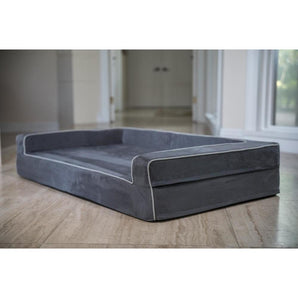
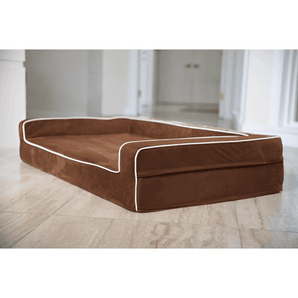
Crate Pad: Loose blankets can bunch up and make it hard for your dog to get comfortable. Consider a crate pad or mat that is properly fitted for your dog’s crate. Our Chew Proof Crate Pad For Dogs (with a 200 Day Guarantee) is a great option. While the cover manages the environment, this pad manages the comfort.
-
Water: If your dog is going to be spending long periods in its crate, install a water attachment so they can stay hydrated.
-
Toys: One or two low-stimulation dog toys for your dog to play with or chew can help them relax without getting them too riled up.
-
Familiar Clothing: In the early weeks, a worn piece of clothing can get your dog used to your scent and make them more comfortable.
Avoid putting food dishes in your dog’s crate at night so you can more easily develop a feeding routine instead of having them snack throughout the night. An empty dish can also serve as an avenue for noisy fidgeting in the middle of the night.
Is a Covered Crate Appropriate for All Dogs?
While it would be nice if a crate cover served as an effective solution for all dogs, the reality is that this is not the case. Some dog breeds, personalities, and situations are not a fit for covered crates.
Don’t cover a crate for a dog that has already settled in an open crate, as this can have adverse effects on a dog’s association with its crate. Dogs that become more fearful with a cover and dog breeds that are prone to overheating also shouldn’t have their crates covered. If your dog is an aggressive chewer, a covered crate may not be effective, as a chewed cover can cause safety risks.
|
What You See |
What It Means |
What to Do |
|
Dog walks in crate voluntarily |
Process is working |
Continue gradual introduction of cover |
|
Dog paws at crate cover |
Dog is not comfortable with the amount of coverage |
Pull cover back and provide slower introduction |
|
Dog chews cover |
Dog is anxious and/or an aggressive chewer |
Consider a chew-resistant coverage option |
|
Dog seems hotter than usual |
Crate has an airflow issue |
Reduce coverage and ensure proper airflow is being provided |
Crate Covering and Crate Training

Covering puppy crate is a helpful method, but it works best when combined with a consistent crate training routine. Gradual introduction paired with reward-based training can help a dog settle into its new living space faster and organically encourage calm crate behavior.
Help your dog get used to its new crate with short sessions, providing treats as a positive reinforcement when they do well. Never use the crate as punishment, as doing so will make it harder for your dog to associate the crate with relaxation. A crate cover can provide a den-like environment, but it won’t automatically solve any negative associations.
Are You Ready to Try for Yourself?
A crate covering can help most dogs more quickly adjust to a new environment through gradual introduction. Be sure to initially leave the front door open and provide proper crate bedding and crate training for the best results.
It might not happen overnight, but a calm, covered space they can call their own is the best way to make your dog feel comfortable. Start with a cover on the top and sides, monitor your dog’s behavior, and adjust coverage as necessary. Many dog owners are surprised at how quickly covering puppy crate makes a difference.
Giving your dog a complete crate setup from the jump can go a long way, and our Collapsible Aluminum Heavy Duty Dog Crate and Chew Proof Crate Pad For Dogs (with a 200 Day Guarantee) are here to help.