Most puppies take about 4 to 6 months to become reliably house trained, although some need closer to a year. Age, breed, bladder control, and consistency all affect the timeline. A predictable routine, thoughtful crate training, and positive reinforcement can help puppies learn faster and make the process less frustrating for everyone.
Bringing home a puppy is fun right up until you realize how much of your day revolves around watching for a squat. If you're wondering how long to potty train a puppy, you probably want a date you can circle on the calendar. Puppies don't work that way. Some catch on within a few weeks; others have three perfect days and then pee in the laundry room. That's puppyhood.
How Long Does It Take To Potty Train a Puppy?
If you're asking how long to potty train a puppy, most puppies need roughly 4 to 6 months to become fully house trained, but the range is wide. A puppy that arrives with good early habits and follows a consistent routine may get there sooner. A very young puppy, a small breed, or a new dog with a history of indoor accidents may need more time. For some, occasional accidents continue for close to a year.
Understanding the potty area and having enough bladder and bowel control to wait are two different things. The American Kennel Club notes that house training can take several months and young puppies need frequent chances to eliminate.
A common rule of thumb is that a puppy can hold its bladder for roughly as many hours as its age in months. Even then, don't treat that number as a goal. A three-month-old puppy may need to go much sooner after eating, drinking, waking up, or playing.
What Affects How Long Potty Training Takes?
Several things can move the timeline forward, or make it feel as if you're stuck in week one.
-
Age: Young puppies simply have less bladder control and bowel control.
-
Consistency: A predictable daily schedule makes the lesson easier to understand.
-
Breed and size: Smaller dogs may need more frequent potty trips because their bladders are smaller.
-
Previous habits: A puppy or adult dog that has regularly eliminated indoors may need time to replace old habits.
-
Supervision: Close supervision lets you prevent accidents instead of discovering them afterward.
-
Your response: Calm, immediate positive reinforcement teaches more than scolding after the fact.
Most puppies aren't being stubborn when they have an accident in the house. They're learning a rule that's completely new to them.
What Is a Realistic Puppy Potty Training Timeline?
A potty training timeline is best used as a guide, not a deadline. Puppies develop at different rates, and even a puppy who is doing beautifully can have an off day.
|
Stage |
Timeframe |
What to Expect |
|
Getting Started |
First Week |
Frequent potty breaks, close supervision, and some indoor accidents while your puppy learns the routine |
|
Building the Habit |
First Month |
More successful potty trips, fewer accidents, and better recognition of the designated potty spot. |
|
More Control |
Two to Four Months |
Longer stretches between breaks and occasional accidents, especially when the routine changes. |
|
Greater Reliability |
Four to Six Months |
Many puppies are mostly accident free and approaching fully house trained, although some still need more time. |
Regression happens. Visitors, travel, bad weather, excitement, or too much freedom too soon can cause another accident. Look at the pattern, not the last accident.
How Can You Speed Up Potty Training?

You can't rush physical maturity, but you can make the lesson much easier to understand. The goal is simple: create lots of successful potty trips and as few chances as possible to practice the wrong behavior.
1. Keep the Daily Schedule Boringly Consistent
Take your puppy out after waking, eating, drinking, playing, napping, and before bed. With young puppies, that can feel constant. It won't stay that way forever.
A regular feeding schedule makes bowel movements more predictable. Repetition helps your puppy anticipate what comes next.
2. Pick One Potty Spot
Take your puppy on a leash to the same place and give them time to finish pottying before the yard turns into playtime. A designated potty spot cuts down on distractions and builds an association with the task.
Keep the trip uneventful until your puppy eliminates. The whole world is interesting to a new puppy. One leaf blowing across the grass can suddenly become more important than why you went outside.
3. Reward Immediately, Not Five Minutes Later
Positive reinforcement works best when the reward is clearly connected to the behavior. Praise and reward heavily as soon as your puppy finishes in the right place. Wait until you're back inside and they may think the treat was for coming through the door. Timing matters.
4. Use Crate Training Thoughtfully
A properly sized crate can be useful during house training because most dogs prefer not to soil their sleeping area. It also helps during those moments when constant supervision isn't realistic.
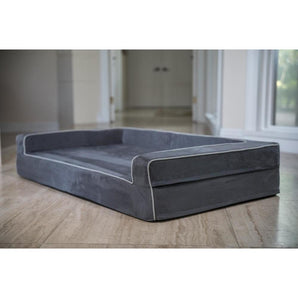
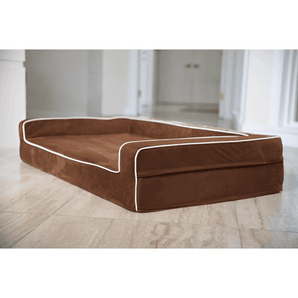
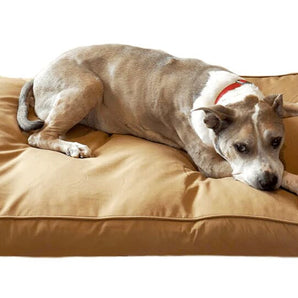
Make the sleeping area practical for this messy stage. The Bully Bed has a removable, machine-washable cover, which helps when an occasional accident happens. For puppies that are especially hard on bedding, the Chew-Proof Dog Bed has a washable cover, waterproof liner, and chew-resistant construction.
A crate should never be used to make a young puppy wait longer than they comfortably can. Potty breaks still come first.
5. Supervise Closely and Prevent the Accident
Watch for circling, sniffing, wandering away, restlessness, or heading toward a familiar accident spot. When you see the signs, head outside.
If an accident happens, clean the area thoroughly with an enzymatic cleaner. Lingering scent can draw a puppy back to the same spot.
At Bully Beds, we hear from pet parents who hit that mid-potty-training wall. They're tired, the puppy had another accident, and suddenly it feels like this phase is going to last forever. It doesn't. A washable sleeping setup, a consistent routine, and patience make those messy months much easier to live through.
Should You Use Puppy Pads or Train Straight to Outdoors?
Both approaches can work, but training directly outdoors is usually simpler if outdoor access is practical. Puppy pads or potty pads can be useful for apartment living, severe weather, mobility limitations, or very young puppies who can't reliably make it outside in time.
The American Kennel Club's indoor potty training guidance also notes that indoor options can be practical when frequent outdoor trips aren't realistic.
Indoor training may mean an extra transition later. Some puppies learn that a pad, laundry room, or litter box is an acceptable potty area and later need another round of training for outdoor-only habits.
If you use puppy pads, keep them in one consistent location. Once your puppy learns the routine, you can gradually move toward your long-term potty plan.
What Should You Do When Your Puppy Has an Accident?
Clean it up and move on. Punishing a puppy after an accident, especially one you discover later, doesn't teach them where you wanted them to go.
If you catch your puppy in the act, calmly interrupt and head to the potty spot. If they finish outside, reward immediately. Then ask what changed: a missed break, a half hour of extra play, more water than usual?
Accidents are information. Use them to adjust the schedule.
When Do Potty Accidents Signal a Medical Problem?
Most potty accidents are simply part of training, but a sudden change is different. If a puppy who has been doing well suddenly starts having frequent accidents, it’s worth calling your veterinarian.
According to Cornell University College of Veterinary Medicine, signs associated with urinary tract infections can include frequent small urinations, straining, accidents in the house, and blood in the urine. Those signs can also overlap with other urinary problems, so your veterinarian should make the diagnosis.
Call your vet if you notice:
-
straining to urinate;
-
frequent attempts that produce only small amounts;
-
blood in the urine;
-
whining or apparent discomfort while urinating; or
-
sudden regression despite previously reliable house training.
Urinary tract infections are one possible cause, but pet parents can't diagnose a UTI from accidents alone. Your veterinarian can determine whether a UTI or another medical issue is involved.
Urinary Support Soft Chews are formulated to support normal urinary tract and bladder health. They are a supportive supplement, not a treatment or cure for a UTI or another urinary condition. If you suspect a medical problem, talk with your veterinarian rather than trying to manage it with a supplement alone.
This article is for informational purposes and isn't a substitute for professional veterinary advice.
When Is a Puppy Really Fully House Trained?

A puppy is fully house trained when the good habits hold even when life gets less predictable. You're no longer watching every move, and potty trips have become routine.
Don't declare victory after one accident-free week and immediately give your puppy the whole house. Expand freedom gradually. If more accidents start happening, tighten the routine again for a while.
That's why there isn't one answer to how long to potty train a puppy. The goal is reliability, not perfection on a deadline.
So, How Long Should You Expect Potty Training to Take?
For most pet parents asking how long to potty train a puppy, 4 to 6 months is a realistic expectation, with some puppies learning faster and others needing closer to a year. Keep the routine consistent, reward good behavior right away, and don't let one messy afternoon erase weeks of progress in your mind.
Your puppy will get there. In the meantime, a comfortable, washable sleeping space can make the training months easier on everyone. Explore The Bully Bed for an orthopedic dog bed with a removable, machine-washable cover that helps simplify those inevitable puppy cleanups.