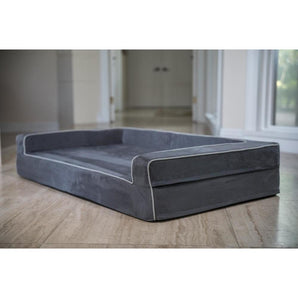
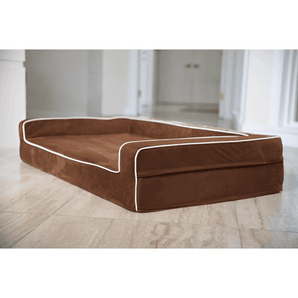
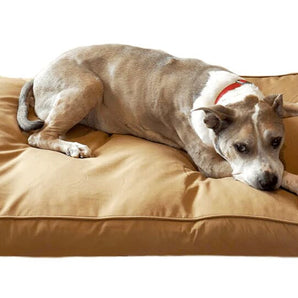
Your dog’s ideal bed size depends on more than breed alone. Dog bed size by breed is a useful starting point, but your dog’s weight, body length, and sleeping style all matter too. Measure your dog from nose to tail, add several inches for comfort, then compare those numbers with a size chart to find the right fit.
You’ve found what looks like the perfect dog bed. The label says “Large,” the dimensions look generous, and your dog seems like they should fit just fine.
Then they lie down and half their body is hanging over the edge.
That’s the gap a size chart closes. Breed gives you a useful starting point, but your dog’s actual size, body shape, weight, and sleeping style all affect how much space they need.
We’ll show you how to measure your dog, match common breeds to the Bully Beds sizing charts, and decide when sizing up makes sense.
Ready to browse? Start with the All Dog Beds Collection, then use the guide below to find the right size and style.
Why Does Dog Bed Size Matter?
A properly sized bed gives your dog enough room to stretch, curl up, turn around, and change positions comfortably. A bed that’s too small can feel cramped, while an oversized bed may feel less secure for dogs that prefer curling against a bolster.
The goal is enough space for your dog to rest naturally without choosing a bed that’s unnecessarily oversized. This matters even more for older dogs and dogs with joint issues, who need room to reposition comfortably.
Texas A&M’s College of Veterinary Medicine recommends considering a pet’s age, size, sleeping preferences, and health conditions such as arthritis when selecting bedding. Read the veterinary guidance here. For older dogs or dogs needing additional joint support, the Infrared Dog Bed is another Bully Beds option to consider.
Your dog’s breed can narrow down the options, but individual dogs within the same breed can vary. That’s why measuring before you buy is worth the few extra minutes.
Signs Your Dog’s Bed Is Too Small
A few quick signs the current bed isn’t sized right:
-
Your dog hangs off the edge or sleeps with their legs draped over the side.
-
They circle or shift for a while before settling, or never fully lie down.
-
They’ve started choosing the floor, the sofa, or a cooler hard surface instead.
-
An older dog seems stiff getting up, a sign they may need more room and support.
How Do You Measure Your Dog for a Bed?

The easiest way to find the right dog bed size is to measure your dog first, then use breed and weight as additional guides.
How to Measure Your Dog Step by Step
-
Grab a measuring tape. Have your dog settle into their usual sleeping position.
-
Measure from nose to tail. Start at the tip of the nose and measure to the base of the tail. Don’t include the tail.
-
Measure their width. Check the widest part of your dog’s body so they have enough room to turn and reposition.
-
Consider sleeping style. A dog that curls up needs less space than one that sprawls across the entire bed.
-
Add about 6–12 inches. This gives your dog extra room to settle comfortably.
-
Check their weight. Weight is especially important when your dog is close to a Bully Beds size cutoff.
For example, a Labrador that sleeps fully stretched out needs enough usable surface for that position. Their breed may point you toward a Large bed, but their sleeping style helps confirm whether that size gives them enough room.
Weight is another useful check because dogs within the same breed can vary considerably. The American Kennel Club’s Breed Weight Chart provides weight ranges for hundreds of breeds, making it a useful reference when you’re comparing your dog’s actual weight with a breed-based recommendation.
For another practical sizing resource, see Finding the Right Size Crate for Your Dog.
Dog Bed Size Chart by Breed
Start by finding your dog’s breed, then check the recommended Bully Beds size. This dog bed size by breed guide gives you a starting point, but you should still compare the recommendation with your dog’s actual measurements and weight.
Bully Beds uses specific dimensions for each size, so you’re not left guessing what “Large” or “XXL” actually means.
Rectangular Dog Bed Sizes
The chart below shows the Bully Beds recommendations for rectangular beds. Keep the 50–55 lb cutoff in mind for the Medium size.
| Size | Dimensions | Best For (Breeds) |
|---|---|---|
| Medium | 34" x 22" | French Bulldog, Small English Bulldog, Staffordshire Bull Terrier, Small Pitbull (not for dogs over 50–55 lbs) |
| Large | 48" x 30" | Boxer, Labrador, Golden Retriever, Small German Shepherd, Viszla |
| Extra Large | 52" x 34" | Boerboel, Cane Corso, Large German Shepherd, Rottweiler, Bull Mastiff, Small English Mastiff |
| XXL | 60" x 48" | Great Dane, Large English Mastiff, Irish Wolfhound, Tosa Inu |
For rectangular beds, The Bully Bed is the primary option to consider once you’ve identified the appropriate size.
Round / Circular Dog Bed Sizes
Round beds use diameter instead of length and width. All Bully Beds round beds are 6 inches thick, and the Large round bed isn’t suitable for dogs over 50–55 lbs.
| Size | Dimensions | Best For (Breeds) |
|---|---|---|
| Large | 34" diameter | French Bulldog, Small English Bulldog, Staffordshire Bull Terrier, Small Pitbull (not for dogs over 50–55 lbs) |
| Extra Large | 44" diameter | Boxer, Labrador, Golden Retriever, Small German Shepherd, Viszla, Boerboel, Cane Corso, Large German Shepherd, Rottweiler, Bull Mastiff, Small English Mastiff |
| XXL | 54" diameter | Great Dane, Large English Mastiff, Irish Wolfhound, Tosa Inu, Bernese Mountain Dog, Leonberger |
If your dog likes to curl up against a raised edge, the Round Sherpa Top Bolster Bed is the matching circular option.
The breed placements and dimensions above follow the Bully Beds sizing data exactly.
What Size Bed for Small Breeds?
For small breeds, start with the Medium rectangular or Large round size, provided your dog is under 50–55 lbs. French Bulldogs, Boston Terriers, Yorkies, Pomeranians, Pugs, Dachshunds, and small Pitbulls can vary in build, so check your dog’s measurements before choosing.
If your dog is near the weight cutoff or sleeps stretched out, consider more space. For dogs that prefer curling against an edge, the Orthopedic 3-Sided Bolster Bed offers a cozier option.
What Size Bed for Medium and Large Breeds?
Medium and large breeds generally start with the Large rectangular or Extra Large round size. Boxers, Labradors, Golden Retrievers, Border Collies, German Shepherds, Doberman Pinschers, Beagles, and Basset Hounds often need enough space to stretch and reposition.
Because dogs within the same breed can vary in size, use the chart as a starting point and confirm the fit with your dog’s measurements. For rectangular beds, The Bully Bed gives you the dimensions to make that comparison.
What Size Bed for Giant Breeds?
Giant breeds generally need the most space, with the largest dogs in the chart fitting the XXL sizes: 60" × 48" for rectangular beds and 54" in diameter for round beds.
Great Danes, Mastiffs, Irish Wolfhounds, Bernese Mountain Dogs, Rottweilers, Cane Corsos, and Leonbergers can vary considerably in build, so check the specific chart recommendation and your dog’s measurements.
At Bully Beds, we built our sizing around big and giant breeds because we’ve heard from owners whose “large” bed left their Great Dane hanging off the edge. Our XXL exists for exactly that dog. For maximum rectangular space, compare your dog’s stretched-out length with The Bully Bed.
Should You Size Up for Your Dog?

In most cases, yes, size up when your dog falls between two sizes, particularly if they like to stretch out or change positions during sleep.
Extra room lets your dog settle naturally without pressing against the edges. But bigger isn’t always better for dogs that prefer to curl tightly against a bolster.
Keep these factors in mind:
-
Your dog sprawls: Favor more sleeping space.
-
Between two sizes: The larger option is usually the safer starting point.
-
Your dog curls tightly: A snugger bolstered bed may work better.
-
Your puppy is growing: Consider their expected adult size.
-
Your dog is older: Avoid a bed that restricts repositioning.
For puppies, choosing only for their current size can mean replacing the bed sooner. Consider their expected adult size while making sure they have enough room to sleep comfortably now.
If your dog likes a bolster but still needs room to stretch, consider the Orthopedic 3-Sided Bolster Bed. For dogs that tend to chew their bedding, the Chew-Proof Dog Bed is another option.
Frequently Asked Questions About Dog Bed Sizing
What size dog bed does a Labrador need?
Most Labradors fit a Large rectangular bed (48" x 30") or an Extra Large round bed (44" diameter). Labs often sleep stretched out, so if yours sprawls or sits at the top of the breed’s weight range, confirm the fit against their nose-to-tail measurement before deciding.
Should a dog bed be bigger than the dog?
Yes, a little. Add roughly 6 to 12 inches to your dog’s nose-to-tail length so they can stretch and reposition. The exception is dogs that like to curl tightly against a bolster, who often feel more secure in a snugger fit.
How do I know if my dog’s bed is too small?
Common signs include your dog hanging over the edge, struggling to fully stretch out, circling repeatedly before settling, or choosing the floor over the bed. Older dogs that seem stiff getting up may also need more room and support.
Do puppies need a different size bed?
It helps to buy for a puppy’s expected adult size rather than their current size, so you’re not replacing the bed as they grow. Just make sure the bed still feels comfortable and secure for them now. A breed weight chart can help you estimate their full-grown dimensions.
Find the Right Dog Bed Size for Your Breed
Finding the right dog bed starts with three checks: measure your dog, consider their sleeping style and weight, and compare those details with the breed size chart. The Bully Beds charts give you specific dimensions for rectangular and round beds, so you’re not relying on a generic size label.
If your dog stretches out, give them room to do it. If they curl against a bolster, consider the sleeping style that makes them comfortable. And if they’re between sizes, don’t be afraid to give them more space.
The perfect bed isn’t about the biggest or the most padded. It’s about the right fit for your dog. Measure once, check the chart, and give your pup a bed they can truly stretch out and settle into.
Ready to find the right fit? Explore The Bully Bed for rectangular options, or browse the All Dog Beds Collection to find the right style for your dog. Use the dog bed size by breed chart as your starting point, then choose the bed that gives your pup the space and support they need.